
IRRIGATION · PACKHOUSES · COLD ROOMS · NUT DRYING
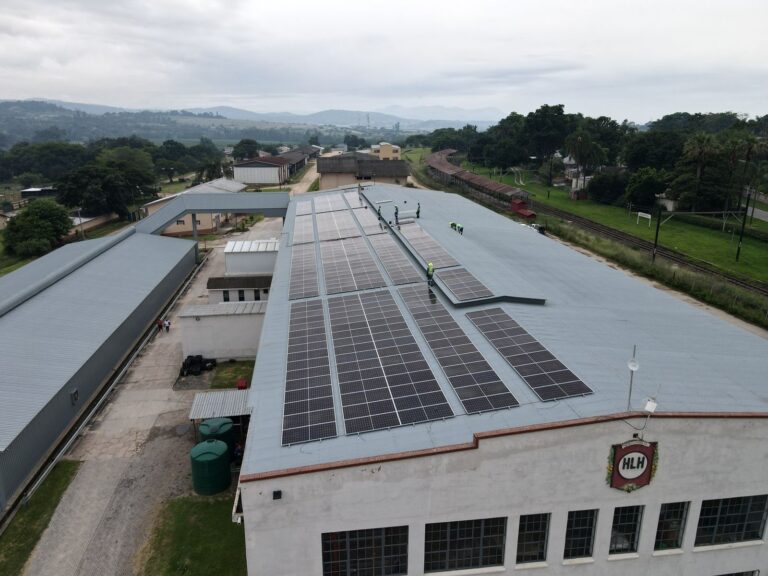
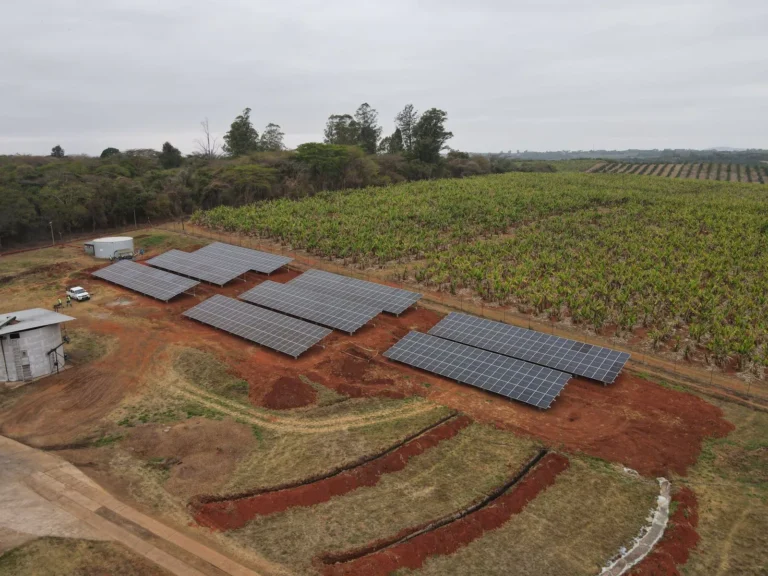
We design, supply and install complete systems. We don’t sell equipment on its own.
Ruraflex or Landrate? Many farms are on the wrong one, or pay fixed charges all year for a pump that runs four months. Send us your latest Eskom account. We check it first, then design solar and battery around how the farm actually runs.
Send us one account. We will tell you what you are overpaying, what can be fixed for nothing, and what a system would pay back. Or call 013 004 0181.
Tell us about your farm and attach your latest Eskom account. If you have more than one supply, start with the one that runs your irrigation or cold rooms.
Your account stays private. It is seen only by one of our principals and the consultant who calls you back. It is kept in our own files, never shared with any supplier or third party, and deleted on request or once your enquiry is complete. Nothing we find is ever published without your written permission, in line with POPIA.
Prefer to talk? WhatsApp 073 451 9889 · Call 013 004 0181 · sales@cegs.co.za
| Item | What we look for |
|---|---|
| Tariff | Ruraflex, Landrate or Nightsave – and whether it fits the farm |
| Fixed daily charges | Billed all year against seasonal use |
| Peak-hour usage | Pumps and cold rooms running in the expensive hours |
| Load profile | What actually runs, and when |
| Generator | Hours run and diesel cost per month |
Start here
A 30 kW pump running eight hours a day, for one winter month, on Eskom's Ruraflex tariff:
Eskom rural tariffs 2026/27, excluding VAT
Nothing was bought to make that difference. The clock did it. One unit costs R8.32 in the winter evening peak and R2.04 after ten at night — four times the price for the same water.
This is why we read the account before we talk about panels. On most farms there is money on the table before a single module is ordered, and it does not cost anything to pick it up.
Ruraflex or Landrate
This is the whole tariff question in two pictures. Landrate charges one price all day. Ruraflex charges by the hour, and the hours are not close to each other.
Two peak windows. Between five and eight in the evening a unit costs more than four times what it costs after ten at night.
Rand per unit (kWh), excluding VAT
The same shape, far gentler. Through summer only the two peak windows sit above Landrate at all, and not by much.
Rand per unit (kWh), excluding VAT
| Period | Hours | R/kWh |
|---|---|---|
| Off-peak | 22:00–06:00 | R2.04 |
| Standard | 08:00–17:00, 20:00–22:00 | R2.66 |
| Peak | 06:00–08:00, 17:00–20:00 | R8.32 |
| Landrate | all day | R3.10 |
| Period | Hours | R/kWh |
|---|---|---|
| Off-peak | 22:00–06:00 | R2.04 |
| Standard | 06:00–07:00, 09:00–18:00, 21:00–22:00 | R2.54 |
| Peak | 07:00–09:00, 18:00–21:00 | R3.91 |
| Landrate | all day | R3.10 |
Eskom 2026/27 rural tariffs, non-local-authority, >300–600 km, under 500 V, excluding VAT. Ruraflex rates shown all-in, with network demand, legacy and ancillary charges added to the energy rate. Weekends are gentler again: 79 of the 168 hours in a week are off-peak.
What we find on farm accounts
Charged per unit, at a price that changes by the hour and by the season.
Charged every month on the size of your supply — in a dry month as much as in a wet one.
Demand spikes, reactive energy, estimated readings, and the wrong tariff for how you farm.
The five we find most often:
Rural tariffs went up another 8.76% in 2026/27. Eskom's tariffs have risen far faster than general inflation since 2007.
The honest answer on money
A price on its own tells you nothing. Two farms can spend exactly the same and get completely different results, because payback is decided by four things:
What happens next
It depends on whether your farm can move when it uses power. Ruraflex prices every unit by the hour, so a farm that can pump at night and in daylight does well on it and a farm that cannot gets hurt by the winter evening peak. Landrate charges one price all day with a higher fixed charge.
We model both tariffs on your own twelve months of readings and show you the difference in rands before you apply for anything. Changing tariff has conditions and a cost, and we will tell you if it is not worth it.
Often, yes. Capacity is charged per kVA every month whether you draw it or not, so a notified demand set years ago for equipment you no longer run is money leaving the farm for nothing.
We check your actual maximum demand against what you are being charged for, and handle the reduction with Eskom where it makes sense. There are rules about how far and how often it can move, and we go through those with you first.
Sometimes just moving the pumping. We have farms where shifting irrigation out of the evening peak and into the lower-rate hours saved more in the first month than any equipment would have, and the change cost nothing but a timer setting.
Solar earns its place when you have daytime load you cannot move, when you are burning diesel, or when the grid is unreliable. We will tell you which case you are in, even when the answer is that you do not need us to install anything.
That load runs when the fruit runs, which is usually the worst time to be buying power. Cold rooms are also the load where an outage costs more than electricity ever will.
We look at the packhouse separately: what it draws, when it draws it, what it costs you in demand charges, and what it would take to carry the cold chain through an outage rather than lose a load of fruit.
It depends on your tariff, how much of your bill is fixed charges, when you can pump, and whether you are running diesel. A farm on the wrong tariff with an oversized supply often gets its first saving before anything is installed.
We put the payback period in writing, calculated from your own readings. If the numbers do not work on your farm, we will say so.
We do not put a price on the website, because a number without your bill behind it is meaningless. The same spend on two farms gives two completely different results depending on tariff, supply size and when the water has to move.
We read the account first, then quote with the payback worked out on your own figures.
Rural supplies go down, and cable theft and storm damage can keep them down longer than anyone would like. That is a design question, not a sales question: which loads have to keep running — cold rooms, fences, the house, one pump — and for how long.
We size around the loads you cannot afford to lose, rather than around keeping the whole farm running, because that is what keeps the cost sensible.
We monitor the systems we install, so a fault shows up in your monthly report instead of on a bill months later, and you get a monthly report of what the system produced against what the account did.
Your account information is used only to do your bill check. It is not shared with anyone else, we handle it in line with POPIA, and you can ask us to delete it at any time.
CleanEnergy Smart Energy Solutions · Lowveld and Limpopo · 013 004 0181 · sales@cegs.co.za